




A scattered approach to innovation often leaves even high-performing teams frustrated and results fleeting. For Corporate Innovation Managers, understanding the current environment is the first move toward sustainable progress. Research highlights how motivation and organizational climate shape innovation performance, making comprehensive assessment essential for companies coordinating innovation across diverse countries and cultures. This guide shares actionable steps for evaluating, structuring, and empowering your global innovation ecosystem.
Table of Contents
- Step 1: Assess Current Innovation Climate
- Step 2: Define Clear Innovation Goals
- Step 3: Empower Teams With Resources And Tools
- Step 4: Integrate Innovation Into Everyday Workflows
- Step 5: Measure Impact And Refine Strategies
Quick Summary
| Key Point | Explanation |
|---|---|
| 1. Assess Innovation Climate | Evaluate your organization’s environment for innovation readiness and identify strengths and weaknesses. |
| 2. Define SMART Goals | Establish specific, measurable, attainable, relevant, and time-based goals to guide innovation efforts effectively. |
| 3. Empower Teams with Resources | Provide necessary tools, training, and budgets to foster team innovation and engagement. |
| 4. Integrate Innovation Daily | Make innovation a regular practice by incorporating it into everyday workflows and processes. |
| 5. Measure Impact Regularly | Implement tracking systems to evaluate innovation performance and refine strategies for improvement. |
Step 1: Assess current innovation climate
Assessing your organization’s current innovation climate is a critical first step in creating a robust innovation strategy. This process involves systematically evaluating how conducive your existing organizational environment is to generating and implementing groundbreaking ideas.
To conduct a comprehensive assessment, start by examining several key dimensions of your innovation ecosystem. The research reveals that motivation and environmental factors significantly impact innovation performance. Your evaluation should include:
- Organizational Culture: Analyze how open your teams are to new ideas and risk-taking
- Leadership Support: Measure leadership’s commitment to innovation and resource allocation
- Collaboration Mechanisms: Review existing channels for cross-functional and interdepartmental idea sharing
- Recognition and Reward Systems: Examine how innovative thinking and experimentation are currently incentivized
A robust innovation climate requires more than individual motivation - it demands a holistic, supportive organizational environment.
When conducting this assessment, leverage multiple data collection methods such as employee surveys, innovation metrics tracking, and focused group discussions. Pay special attention to barriers that might be hindering creative thinking and new solution development.

Pro tip: Create a structured scorecard to quantitatively track your innovation climate across different organizational dimensions, allowing for consistent and objective measurement over time.
Step 2: Define clear innovation goals
Defining clear and actionable innovation goals is essential for transforming your organization’s innovative potential into tangible results. This critical step provides strategic direction and creates a structured framework for your innovation initiatives.
To establish effective innovation goals, organizations should implement strategic goal-setting techniques that align with broader business objectives. Your innovation goals should be crafted using the SMART framework:
- Specific: Clearly articulate what you want to achieve
- Measurable: Establish quantifiable metrics for tracking progress
- Attainable: Set realistic and achievable targets
- Relevant: Ensure goals connect directly to organizational strategy
- Time-Based: Define precise timelines for goal completion
Effective innovation goals transform abstract aspirations into concrete, executable strategies.
When developing these goals, engage cross-functional teams to gather diverse perspectives and ensure comprehensive alignment. Consider both incremental improvements and breakthrough innovations that can potentially disrupt your industry.

Pro tip: Create a visual innovation roadmap that breaks down larger goals into smaller, manageable milestones to maintain team motivation and track incremental progress.
Step 3: Empower teams with resources and tools
Empowering your teams with the right resources and tools is fundamental to driving organizational innovation. This step transforms your innovation strategy from conceptual planning to tangible action by providing teams with the necessary support and technological infrastructure.
Empowering leadership techniques demonstrate that strategic resource allocation significantly boosts team innovation and engagement. To effectively support your innovation initiatives, consider providing the following key resources:
- Technology Platforms: Invest in collaborative digital tools that facilitate seamless communication
- Training Programs: Develop continuous learning opportunities focused on innovation skills
- Financial Resources: Allocate dedicated budgets for experimental projects and prototyping
- Time Allocation: Create structured time for teams to explore and develop innovative concepts
- Mentorship Networks: Establish cross-functional coaching and knowledge-sharing mechanisms
Effective resource empowerment transforms individual potential into collective innovation capability.
When selecting tools, prioritize platforms that promote transparency, encourage knowledge sharing, and enable rapid experimentation. Ensure that your technological infrastructure supports both structured project management and spontaneous creative exploration.
Pro tip: Conduct periodic technology and resource audits to ensure your innovation toolkit remains cutting-edge and aligned with emerging organizational needs.
Step 4: Integrate innovation into everyday workflows
Transforming innovation from an isolated activity to a consistent organizational practice requires strategic embedding of creative thinking into daily work routines. This approach ensures that innovation becomes a natural part of your team’s operational DNA, rather than an occasional special project.
Artificial intelligence and workflow integration demonstrate how technology can systematically support continuous innovation. To effectively integrate innovation into everyday workflows, consider these key strategies:
- Regular Innovation Time: Allocate dedicated hours for exploratory thinking and experimentation
- Continuous Learning Channels: Create platforms for sharing insights and novel approaches
- Iterative Feedback Loops: Implement quick review cycles that encourage ongoing refinement
- Cross-Functional Collaboration: Design workflows that naturally promote interdepartmental idea exchange
- Innovation Metrics: Develop transparent tracking mechanisms that recognize creative contributions
Innovation thrives when it becomes an embedded expectation, not an exceptional event.
Successful integration requires breaking down traditional departmental silos and creating flexible work environments that encourage spontaneous idea generation. Technological tools should support, not replace, human creativity and collaborative problem-solving.
Pro tip: Rotate team members across different projects and departments periodically to stimulate fresh perspectives and cross-pollinate innovative thinking.
Step 5: Measure impact and refine strategies
Effective innovation management requires systematic measurement and continuous strategy refinement. This critical step transforms your innovation efforts from random experiments into a data-driven, strategic organizational capability.
Research impact evaluation frameworks demonstrate the importance of tracking comprehensive innovation metrics. To measure and refine your innovation strategies, focus on these key dimensions:
- Quantitative Performance Metrics: Track revenue generated from new ideas
- Qualitative Impact Assessment: Evaluate organizational learning and adaptability
- Innovation Velocity: Measure speed of idea generation and implementation
- Ecosystem Engagement: Assess participation and contribution levels across teams
- Return on Innovation Investment: Calculate financial and strategic returns
Measurement is not about judgment, but about understanding and improving innovation potential.
Successful measurement requires creating transparent, objective evaluation processes that motivate teams without generating undue performance pressure. Balance numerical metrics with nuanced assessments of creativity and potential.
The following table compares different innovation measurement dimensions and their organizational benefits:
| Measurement Dimension | Tracks What? | Business Benefit |
|---|---|---|
| Quantitative Metrics | Financial or output data | Shows ROI and progress |
| Qualitative Assessment | Team learning and mindset | Informs culture improvements |
| Innovation Velocity | Speed of idea execution | Identifies time-to-market issues |
| Ecosystem Engagement | Collaboration participation | Reveals knowledge sharing levels |
| Return on Innovation | Impact vs. investment ratio | Guides resource allocation |
Pro tip: Implement a quarterly innovation review that combines hard data analysis with narrative insights from team members to capture both measurable and intangible innovation outcomes.
Here’s a summary of how each innovation strategy step supports organizational success:
| Innovation Step | Main Focus | Typical Outcome |
|---|---|---|
| Assess current climate | Environment evaluation | Reveals strengths and gaps |
| Define clear goals | Set SMART innovation objectives | Aligns efforts and priorities |
| Empower teams with resources | Resource and tech enablement | Fuels experimentation |
| Integrate into workflows | Daily process adaptation | Sustains ongoing innovation |
| Measure and refine strategies | Performance tracking and updates | Promotes continuous learning |
Drive Innovation Success with Skipso’s Comprehensive Platform
Creating a culture of innovation demands more than just good intentions. The article highlights challenges like assessing your organization’s innovation climate, defining clear goals, empowering teams with resources, and embedding innovation into everyday workflows. These critical steps require a structured system to track progress, boost collaboration, and measure impact consistently. Skipso understands these pain points and offers a powerful solution to transform innovation strategies into tangible business outcomes.
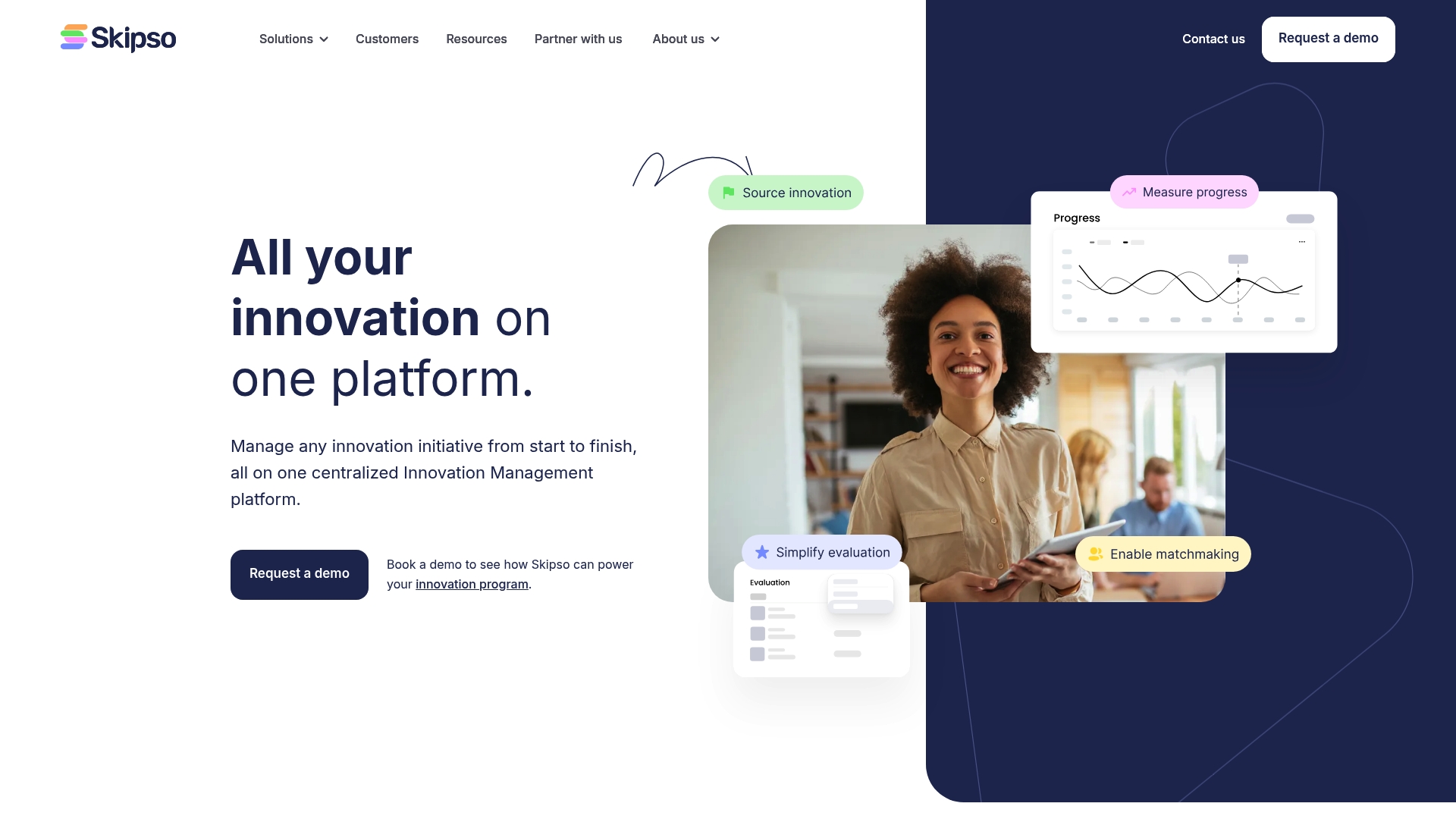
Unlock your organization’s full innovative potential by leveraging Skipso’s platform designed for managing the entire innovation lifecycle. From fostering cross-functional collaboration and enabling resource allocation to running high-impact programs such as corporate innovation challenges and startup accelerators, Skipso equips you with the tools to build a thriving innovation ecosystem rooted in measurable success. Don’t wait to elevate your innovation journey. Explore how Skipso can support your goals right now at Skipso’s Innovation Platform. Start turning your innovation strategy into real business growth today by visiting https://skipso.com.
Frequently Asked Questions
How can I assess my organization’s current innovation climate?
To assess your organization’s current innovation climate, examine key dimensions such as organizational culture, leadership support, collaboration mechanisms, and recognition systems. Start by conducting employee surveys and focused discussions to identify barriers to innovation and track your findings with a structured scorecard.
What are the SMART criteria for defining innovation goals?
The SMART criteria for defining innovation goals are Specific, Measurable, Attainable, Relevant, and Time-Based. Use these criteria to create clear objectives that align with your overall business strategy, ensuring that each goal can be tracked with quantifiable metrics over a defined time period.
What resources should I provide to empower my teams for innovation?
To empower your teams for innovation, provide resources like technology platforms for collaboration, training programs focused on innovation skills, financial resources for projects, and structured time for creative exploration. Ensure that all team members have access to the tools they need to experiment with new ideas regularly.
How can I integrate innovation into everyday workflows?
To integrate innovation into everyday workflows, allocate regular innovation time for teams, create continuous learning channels, and implement quick feedback loops for refining ideas. Make these activities part of the routine to promote a culture where creative thinking is expected and valued in daily operations.
What metrics should I use to measure the impact of my innovation strategies?
Use both quantitative metrics, such as revenue generated from new ideas, and qualitative assessments, like team learning and adaptability, to measure innovation impact. Track these metrics regularly to understand your innovation performance and refine your strategies effectively.
How often should I review my organization’s innovation strategy?
You should conduct a review of your organization’s innovation strategy at least quarterly. This allows you to evaluate the effectiveness of your initiatives, track progress, and make necessary adjustments based on measurable outcomes and team feedback.
Recommended


Not sure where to start?
Tell us what you are trying to run. We will help map it to the right
program, ecosystem, AI, or GRAITR setup.


